
Edda Lindqvist
Edda covers identifiers: what RFC 9562 actually requires of each version, where the specification leaves an implementation free to choose, and what the chosen behaviour costs once a few million rows exist.
The pages under this byline tend to open on a number rather than a definition, because the questions that bring people here are comparative. How much space does the text form waste against the binary one. How often do two v7 values generated in the same millisecond come back out of order. Whether a given regex accepts the Nil UUID.
When a measurement contradicts the draft, the draft is what changes. Two of the corrections listed on the about page came out of that: the .NET sorting problem that turned out not to exist, and the padding requirement that `atob` does not actually have.
What this byline is strict about
25 posts under this byline
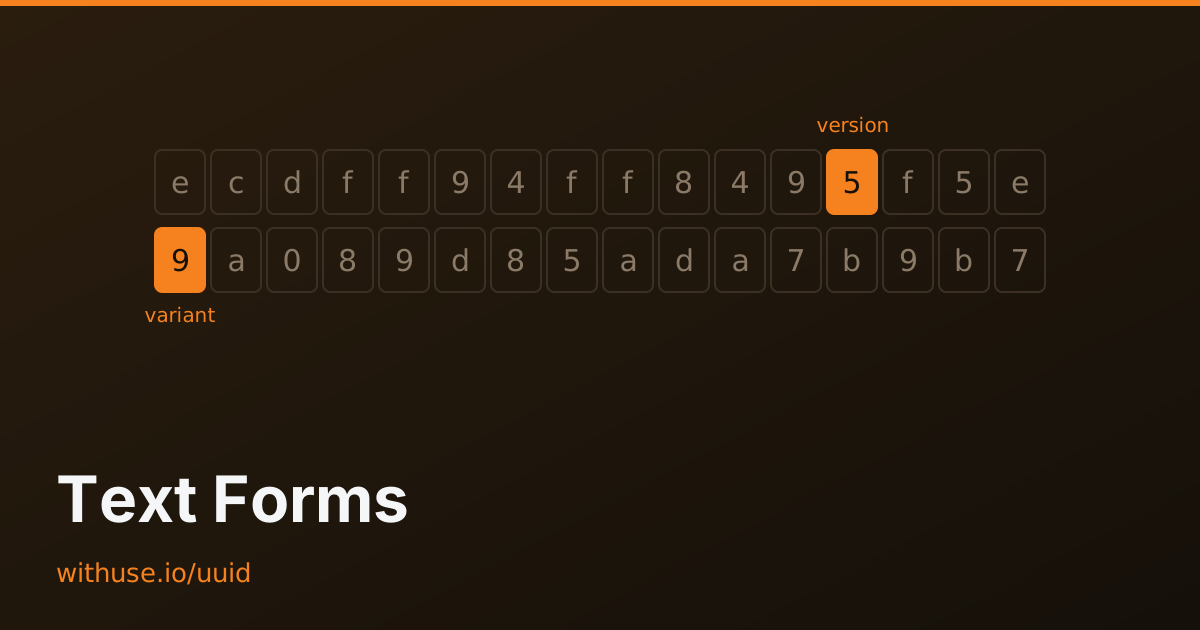
UUID Text Forms — Seven Spellings Across Five Parsers
Seven spellings of one UUID through two standard libraries: Python and .NET agree on four and disagree on three, in both directions.
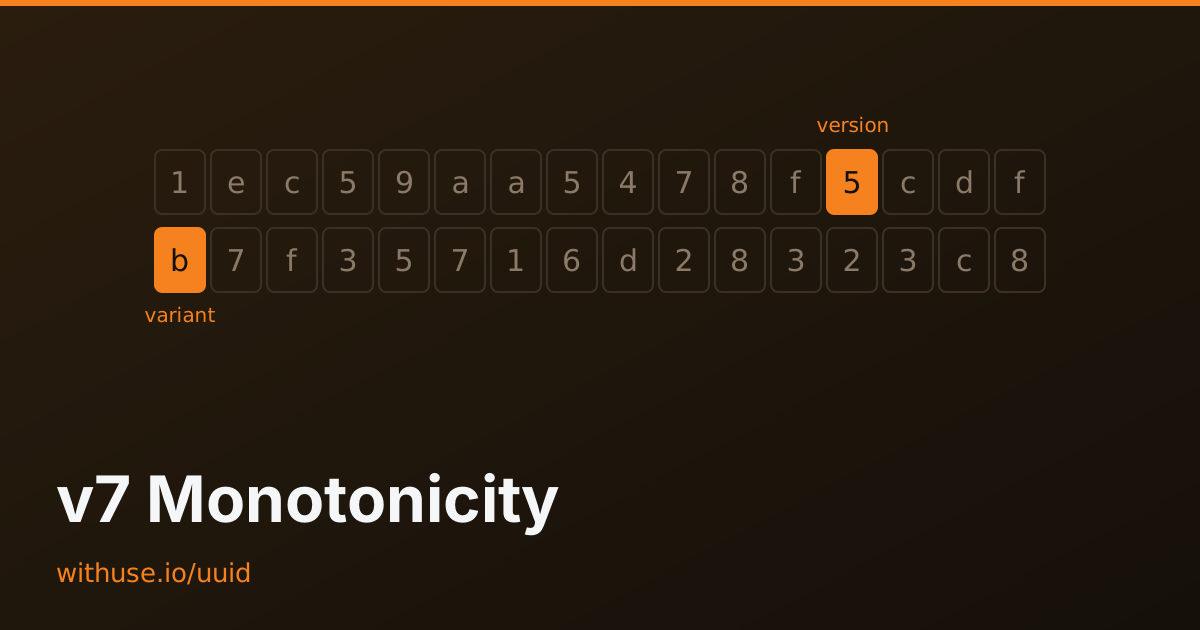
UUID v7 Monotonicity — Same-Millisecond IDs Sort Wrong
v7 sorts by time only across milliseconds — inside one, 50.2% of adjacent pairs came back reversed.
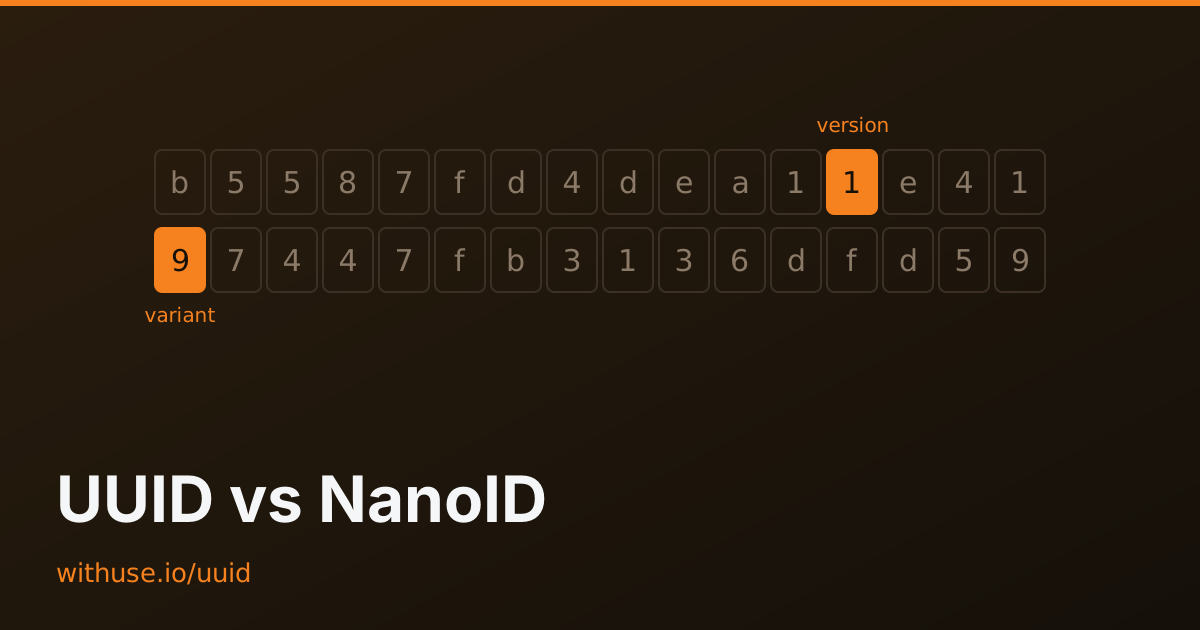
UUID vs NanoID: Shorter and Higher Entropy
21 characters at 126 bits against 36 at 122 — NanoID wins on both, and gives up the ecosystem.
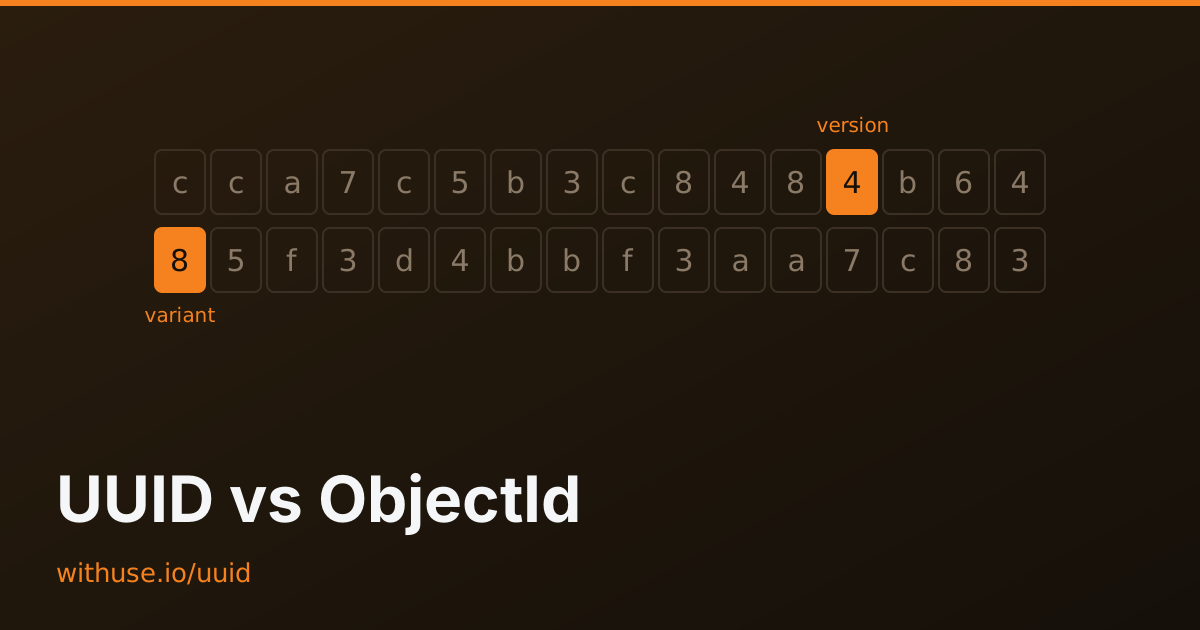
UUID vs MongoDB ObjectId: 12 Bytes Against 16
12 bytes against 16: what each structure spends its bits on, and when to store a UUID in MongoDB.
Is a UUID Secure? Six Ways the Assumption Breaks
Is a UUID secure? Guessability, what each version leaks, and why an identifier is not a credential.
UUID vs Auto-Increment: Which Primary Key Should You Use?
8-byte integer versus 16-byte UUID: storage, enumeration risk, offline generation, and how v7 narrowed the gap.
UUID in C#: Guid.NewGuid, CreateVersion7 & the Byte-Order Trap
Guid.NewGuid() for v4 and .NET 9's Guid.CreateVersion7(), the missing v3/v5 support, Guid.Empty vs null, and the byte round-trip that corrupts silently.
UUID Decoder — Check Version, Variant & Extract the Timestamp
Paste a UUID to read its version and variant, recover the creation time from v1, v6 and v7, inspect the node field and see the per-version byte layout.
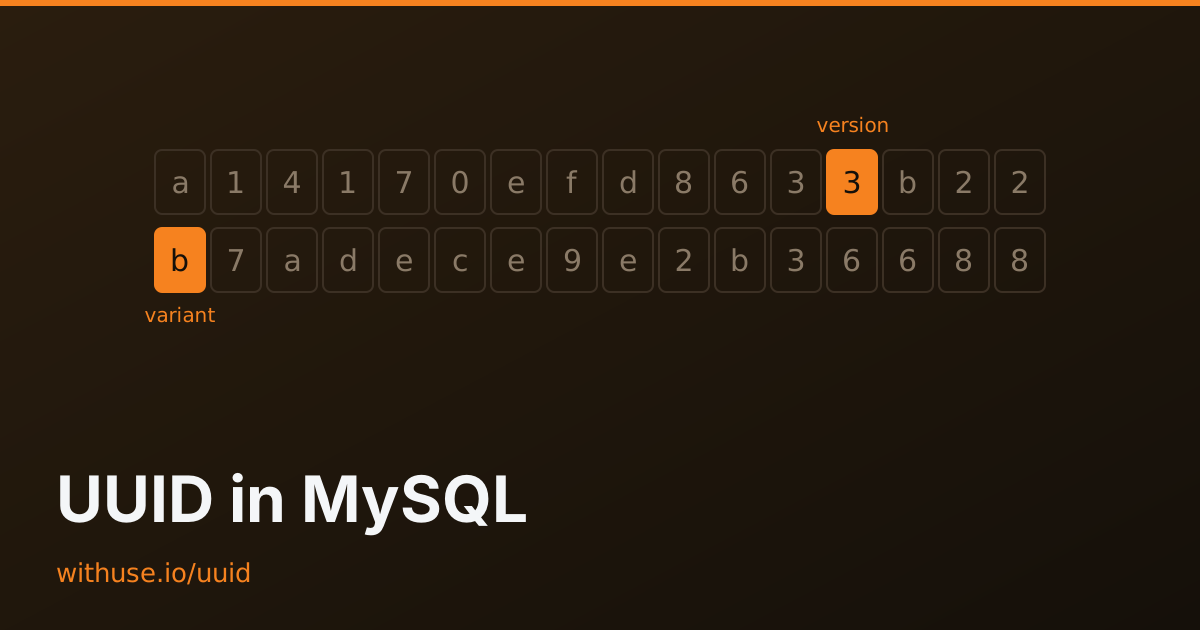
UUID in MySQL: BINARY(16), UUID_TO_BIN & the Swap Flag
BINARY(16) storage, what UUID_TO_BIN's swap flag really does, why MySQL's UUID() is v1, and InnoDB clustered-index cost.